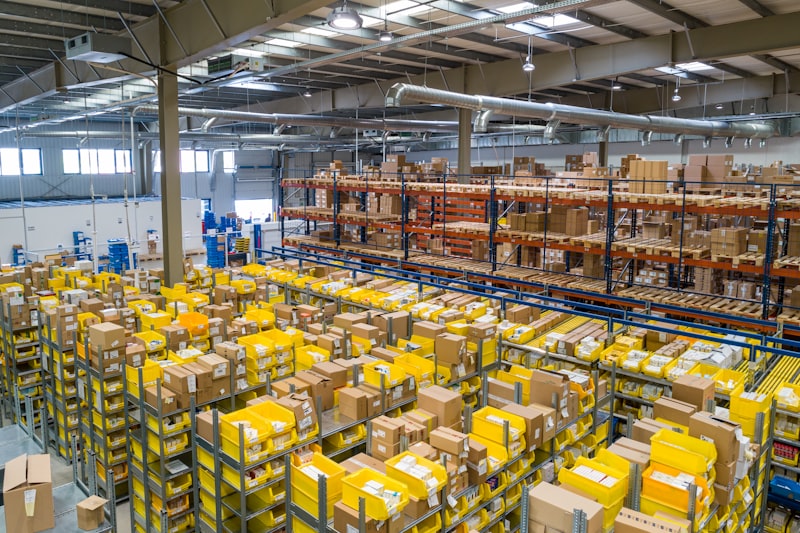
The Inventory Problem That Costs Billions
Indonesian SMEs lose an estimated Rp 15-25 juta per bulan from inventory problems alone. That includes:
- Stockouts: Lost sales when popular items aren't available (typically 5-10% of potential revenue)
- Overstock: Capital tied up in slow-moving inventory (15-25% excess on average)
- Expiration/Obsolescence: Products that expire or become unsellable (2-5% of inventory value)
- Theft and shrinkage: Unaccounted losses (1-3% of inventory value)
AI can address the first three issues with remarkable accuracy.
The AI Inventory Framework
Here's a practical framework that works for Indonesian SMEs:
Layer 1: Demand Forecasting
AI predicts what you'll need, when, and how much:
type DemandForecaster struct {
    db       *sqlx.DB
    aiClient *AIClient
}

func (f *DemandForecaster) Forecast(ctx context.Context, productID string, horizonDays int) (*Forecast, error) {
    // Get historical sales data
    history, err := f.getSalesHistory(ctx, productID, 365)
    if err != nil {
        return nil, err
    }

    // Include external factors
    factors := []string{
        "day_of_week",
        "month",
        "holiday_proximity",
        "weather_forecast",
        "promotional_calendar",
        "local_events",
    }

    // AI-powered forecast
    prompt := fmt.Sprintf(`
        Product: %s
        Historical daily sales (last 365 days):
        %s

        External factors to consider: %s

        Forecast daily demand for the next %d days.
        Account for:
        - Seasonal patterns
        - Day-of-week patterns
        - Upcoming holidays and events
        - Recent trend changes

        Provide: daily quantities with confidence intervals.
    `, productID, formatHistory(history), strings.Join(factors, ", "), horizonDays)

    forecast, err := f.aiClient.Analyze(ctx, prompt)
    if err != nil {
        return nil, err
    }

    return parseForecast(forecast), nil
}
Layer 2: Auto-Reorder
When AI predicts a stockout, it triggers automatic reorder:
type AutoReorderEngine struct {
    forecast    *DemandForecaster
    erp         *ERPClient
    thresholds  map[string]*ReorderThreshold
}

func (e *AutoReorderEngine) CheckAndReorder(ctx context.Context) ([]ReorderAction, error) {
    actions := []ReorderAction{}

    products, err := e.erp.ListProducts(ctx)
    if err != nil {
        return nil, err
    }

    for _, product := range products {
        // Get AI forecast
        forecast, err := e.forecast.Forecast(ctx, product.ID, 30)
        if err != nil {
            continue
        }

        // Calculate reorder point
        avgDailyDemand := forecast.AverageDailyDemand
        leadTime := product.SupplierLeadTimeDays
        safetyStock := avgDailyDemand * 2 // 2 days safety stock

        reorderPoint := (avgDailyDemand * float64(leadTime)) + safetyStock

        if float64(product.CurrentStock) <= reorderPoint {
            // Calculate order quantity using EOQ
            orderQty := calculateEOQ(product, avgDailyDemand)

            actions = append(actions, ReorderAction{
                Product:    product,
                Quantity:   orderQty,
                Supplier:   product.PreferredSupplier,
                Urgency:    calculateUrgency(product.CurrentStock, reorderPoint),
                Reason:     fmt.Sprintf("Stock %d below reorder point %d (AI forecast)", product.CurrentStock, int(reorderPoint)),
            })
        }
    }

    return actions, nil
}
Layer 3: Smart Categorization
AI categorizes inventory using ABC analysis enhanced with ML:
func (s *SmartInventory) ABCAnalysis(ctx context.Context) (*ABCReport, error) {
    products, err := s.getAllProductMetrics(ctx)
    if err != nil {
        return nil, err
    }

    report := &ABCReport{}

    for _, p := range products {
        score := calculateABCScore(p) // Based on revenue, velocity, margin

        switch {
        case score >= 80:
            report.A = append(report.A, p) // Top 20% = 80% revenue
        case score >= 95:
            report.B = append(report.B, p) // Next 15% = 15% revenue
        default:
            report.C = append(report.C, p) // Bottom 65% = 5% revenue
        }
    }

    // AI recommendations per category
    report.Recommendations = map[string]string{
        "A": "Monitor daily. Auto-reorder enabled. Priority shelf space.",
        "B": "Monitor weekly. Standard reorder rules.",
        "C": "Review monthly. Consider discontinuing low performers. Reduce safety stock.",
    }

    return report, nil
}
Real Implementation: Restaurant Chain
Here's what I built for a restaurant chain with 8 locations in Jakarta:
Before: Each location manually ordered ingredients weekly. Manager judgment calls led to 20% overstock on perishables. Stockouts on popular items during peak hours.
After AI implementation:
- Perishable waste reduced by 35% — AI predicts demand based on day, weather, events, and historical patterns
- Stockouts reduced by 60% — Auto-reorder triggers before items run out
- Total savings: Rp 18 juta/month across 8 locations
- Implementation cost: Rp 35 juta (one-time) + Rp 2 juta/month (AI service)
The Tech Stack for Inventory AI
- Database: PostgreSQL for structured data, Redis for real-time stock levels
- Backend: Go services for data processing and API
- AI: LLM API for demand analysis, lightweight ML model for time series forecasting
- Frontend: React dashboard with real-time inventory views
- Integration: WhatsApp bot for alerts and mobile inventory counts
Budget Options
| Tier | Features | Monthly Cost |
|---|---|---|
| Basic | ABC analysis + basic alerts | Rp 500K-1M |
| Standard | + AI demand forecasting + auto-reorder | Rp 2-3M |
| Premium | Full AI suite + predictive analytics + multi-location | Rp 5-8M |
The Bottom Line
AI inventory management isn't about robots in warehouses. It's about knowing what you need before you need it. For Indonesian SMEs, even basic AI forecasting can save Rp 5-15 juta per month. Start small, measure results, and scale up.